
Why Your Next Computer or Server Could Cost More
Your business does not need to use AI to feel its impact on hardware costs. Here is how data center demand, changing component prices, and shorter quote windows are reaching everyday business technology.
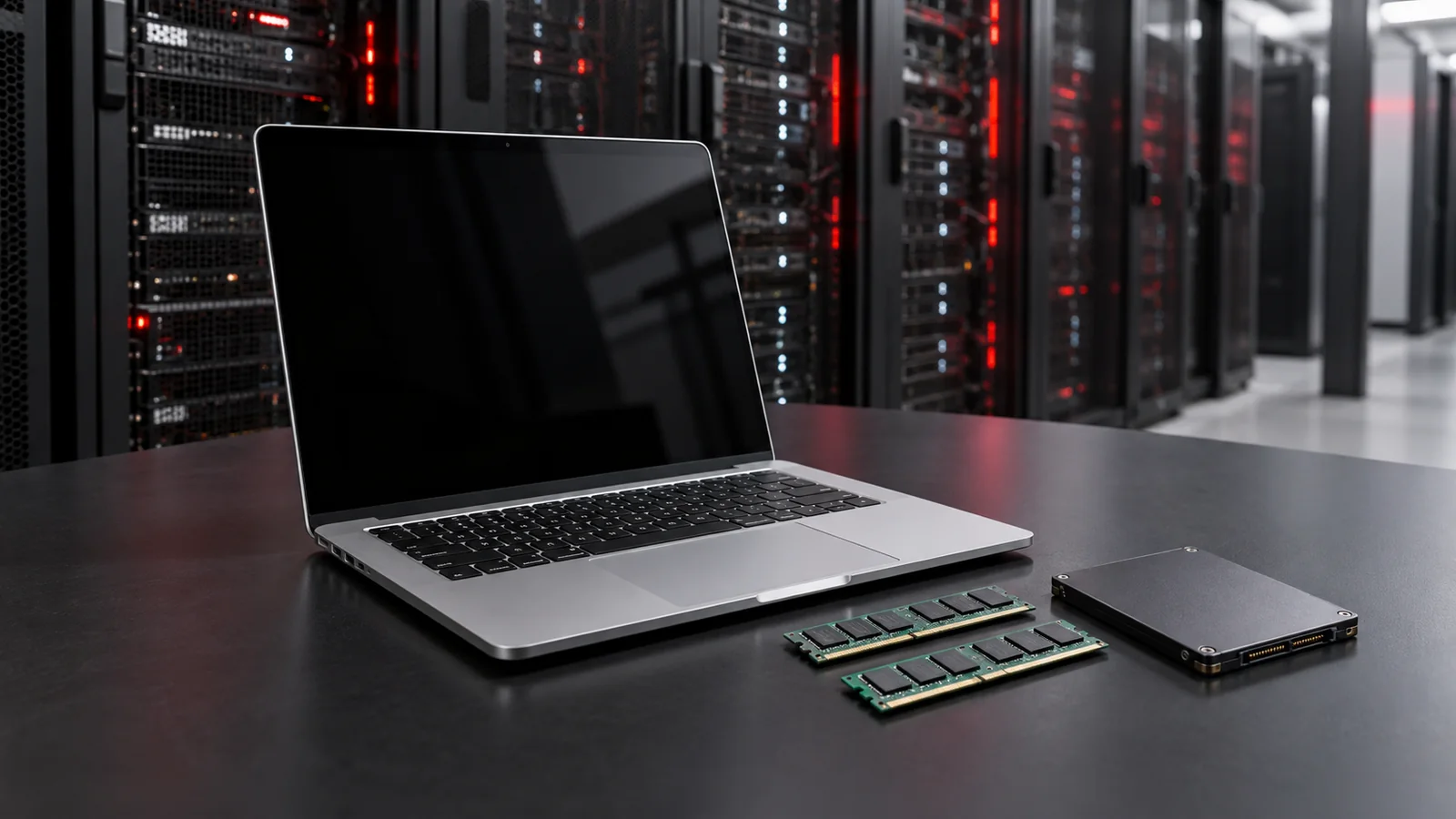
You budget for a new server, settle on the configuration, and send the quote for approval. A few weeks later, the same equipment comes back at a higher price. Your business has not asked for anything more, but the cost has changed.
One reason is the competition for the memory and storage inside those machines. AI data centers need enormous amounts of both, and that demand is influencing what manufacturers produce. The effects can reach an ordinary office laptop even when the business buying it has no plans to run AI.
At Single Stop Technologies, we have seen supplier prices change several times within a year. For business owners, the challenge is knowing how much confidence to place in a technology budget when the equipment itself keeps being repriced.
How AI demand reaches an office computer
RAM gives a computer working space for open applications. Storage, such as a solid-state drive, holds its files and software. Computers and servers need both, and large AI installations need them across many machines.
AI infrastructure uses several memory technologies, including specialized high-bandwidth memory, conventional system memory, and flash storage. Micron's overview of AI data centers shows how these different products support the same computing infrastructure. They are distinct components, but they draw on overlapping suppliers and manufacturing investment.
An office laptop can therefore be affected by production decisions made to serve much larger customers. In its September 7, 2026 market report, TrendForce said memory suppliers' inventories remained historically low and additional DRAM supply was mainly being allocated to servers. That helps explain why strong demand in one part of the technology market can tighten supply elsewhere.
Crucial shows how supplier priorities are changing
In December 2025, Micron announced its exit from the Crucial consumer business, with consumer shipments scheduled to continue through February 2026. The company tied the decision to AI-driven demand for memory and storage and improving supply for larger strategic customers.
Micron also committed to continued warranty service and support for Crucial products and continued sales of Micron-branded enterprise products.
For business buyers, the significance is the change in priorities. A familiar consumer brand was being wound down as a major supplier focused on faster-growing markets. It is a concrete example of how data center demand can reshape the products available to other buyers.
Why the same specification can have a different price
A computer already in stock may contain memory purchased months earlier at a lower cost. When that stock sells out, the next batch can arrive with more expensive components, even if the processor, RAM capacity, and storage capacity look identical on the quote.
Computer manufacturer Framework has described this inventory effect in its ongoing pricing updates. On July 22, 2026, it reported that supplier pricing for a particular laptop memory format had more than doubled compared with its previous inventory.
Then, on September 8, Framework reported securing limited quantities at a lower cost and announced price reductions for eligible orders. Those costs were still above the original launch baseline.
That is what makes this market difficult to budget for. Some configurations become more expensive while others stabilize or fall. Inventory timing and the specific parts inside the device can matter as much as the model name.
Why some hardware quotes expire sooner
In its February 26, 2026 earnings call, Dell described shortening quote validity periods and adjusting prices more quickly as component costs rose. It also discussed reducing promotions and discounts.
The commercial reason is straightforward: keeping a quote open for 30 days can mean promising a selling price before knowing what the necessary inventory will cost. A shorter window reduces the supplier's exposure to another increase.
At Single Stop, we have encountered supplier offers valid only through the end of the day. Terms still vary by vendor, product, and agreement, but these shorter windows can leave less time for internal approvals before pricing needs to be checked again.
The pressure extends beyond laptops and servers
Networking devices and other connected equipment also contain memory and storage, so component costs can affect more of a technology project than its computers.
A dated example comes from distributor Streakwave. Its Ubiquiti Memory Surcharge Notice, effective April 24, 2026, listed additional charges for selected UniFi gateways, switches, and Wi-Fi access points. The notice attributed the charges to volatility in memory and storage markets.
For a business replacing a server and upgrading its network at the same time, that can mean cost changes across several parts of the project. The amount depends on the equipment and the supplier's pricing at the time of purchase.
Where tariffs fit into the price
Tariffs add a separate source of cost uncertainty. When an import duty applies, it adds a cost that a vendor may absorb or reflect in its selling price. The impact depends on the product and its country of origin, among other factors.
Framework's tariff updates in April 2025 documented price changes and refunds as import rules changed. That historical example shows why a tariff announcement does not translate into the same markup on every electronic device.
A memory surcharge and an import tariff have different causes. Streakwave's notice attributed its surcharge to component-market costs. The name and explanation of an added charge matter when understanding why a hardware quote has changed.
Why pricing may stay unpredictable
Expanding chip production takes time. In January 2026, Micron announced a new NAND factory in Singapore with wafer output scheduled to begin in the second half of 2028. Announcing new capacity does not immediately put more storage products on a distributor's shelf.
Meanwhile, TrendForce's July 2026 outlook projected continued server memory price increases into 2027, while expecting the pace to moderate. That forecast concerns server memory contracts; it is not a prediction that every complete server will increase by the same amount.
Our view is that uneven pricing could remain a feature of business technology buying for some time. New supply and softer demand could relieve pressure, and individual products can get cheaper even while other categories rise.
For a business budget, the difficult change is losing confidence that last quarter's price will still be available next quarter. A higher price can reflect a change in component costs without bringing any additional capability to the equipment.
Understanding the cost of your next technology project
If you are reviewing a computer or server proposal and want to understand the specifications, availability, or added charges, talk with Single Stop Technologies. We help businesses select and support technology that fits the way they work.